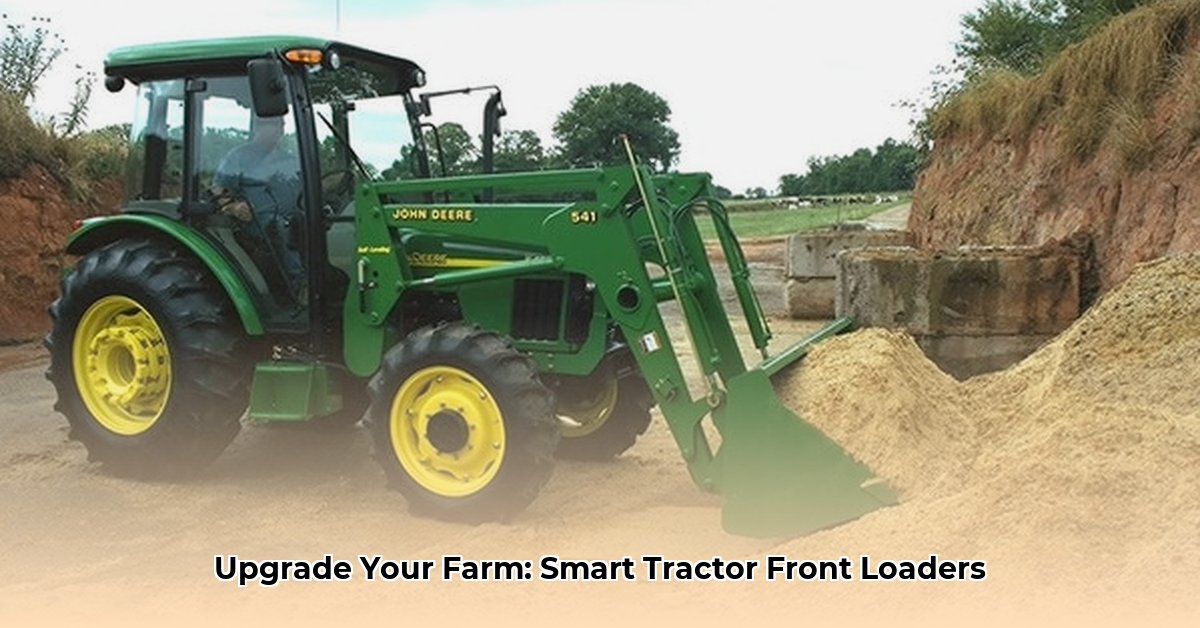
Tractor Front Loader Selection: A Comprehensive Guide
Choosing the right front loader for your tractor is crucial for maximizing farm efficiency and profitability. This guide provides a comparative review of leading brands and offers actionable steps to ensure a smart investment. We'll explore key features, brand comparisons, and a step-by-step process for selecting the ideal loader for your specific needs. For more information on smaller loaders, check out this helpful resource: Small Tractor Loaders.
Assessing Your Farm's Needs: The Foundation of Choice
Before examining specific loaders, thoroughly assess your farm's requirements. This crucial first step ensures you select a loader perfectly matched to your operation's demands.
- Workload Analysis: What tasks will the loader perform? Heavy hay bales, delicate grain, manure management, or pallet handling? The type of workload directly influences the required lift capacity, reach, and hydraulic performance. For example, manure handling requires a loader with a high dump angle to facilitate quick and efficient unloading.
- Tractor Compatibility: The loader must be perfectly matched to your tractor's horsepower and hydraulic capabilities. Using an underpowered loader will reduce efficiency while an oversized loader presents safety concerns. Ensure the loader's specifications align with your tractor's lift capacity and hydraulic flow rate. Consult your tractor's manual for precise compatibility data.
- Budgetary Constraints: Front loaders represent a significant investment. Determine a realistic budget before beginning your search. This prevents disappointment and ensures you focus on loaders within your financial reach. Consider not just the initial purchase price, but also ongoing maintenance, repairs and fuel consumption costs.
- Terrain Considerations: Will the loader operate in predominantly flat areas or rough, hilly terrain? Loaders designed for rugged terrain offer features like enhanced stability and increased ground clearance, which are crucial for safe operation on uneven surfaces.
Key Features: Beyond Lifting Capacity
While lift capacity is paramount, several additional features significantly impact a loader's overall performance and usability.
- Lifting Capacity & Height: Crucial specifications. Ensure the maximum lift capacity comfortably exceeds your heaviest anticipated loads. Likewise, verify sufficient lifting height to reach required elevations (e.g., loading hay into a loft). A consistent lift capacity throughout the loader’s reach is also vital, as many loaders lose power at full extension.
- Hydraulic System Efficiency: Smooth, responsive hydraulics are key. Features like self-leveling maintain a consistent load angle, even as the boom is raised or lowered. Faster hydraulics mean quicker cycle times, enhancing overall efficiency. However, this usually comes at a higher cost. Consider whether the added speed justifies the increased expense for your particular operations.
- Attachment System: Quick-attach systems significantly reduce downtime and improve efficiency. Ensure the system's ease of use and the availability of suitable attachments for your specific tasks. Standardized attachments offer more choices and potentially lower costs in the long run.
- Durability and Build Quality: A front loader is a substantial investment; prioritize durability. Look for robust construction, high-quality components, and a strong manufacturer's reputation for reliable equipment. Examine materials and construction to assess their resistance to wear and tear in demanding agricultural settings.
Popular Brands: A Comparative Overview
Several reputable manufacturers produce high-quality tractor front loaders. This section provides a brief comparison, based on available information. However, individual model performance may vary significantly.
- John Deere: Renowned for robust construction and refined hydraulic systems, often incorporating sophisticated self-leveling features. Their quick-attach systems frequently prioritize ease of use. However, this often translates into a premium price point.
- Case IH:Offers a wide range of loaders to suit different tractor sizes and farm operations and often emphasizes ease of maintenance, minimizing long term costs. This is a significant advantage for long term operation and return on investment.
- Kubota: Similar to John Deere, Kubota loaders are usually well equipped and highly regarded for their quality and reliability. They frequently incorporate user-friendly designs and advanced hydraulic systems.
- Pronar: Often lauded for competitive pricing coupled with compatible attachments. While build quality may not match that of established names, they are a viable budget-friendly option for many farmers.
Note: This is not an exhaustive list. The optimal brand depends heavily on individual needs and priorities.
Selecting Your Loader: A Step-by-Step Approach
- Define Your Operational Needs: Document all tasks, anticipated loads, required lift height, and reach.
- Research Compatible Models: Identify loaders compatible with your tractor and matching your workload requirements. Focus on reputable brands with positive user reviews.
- Comparative Analysis: Carefully compare specifications, focusing on lift capacity, hydraulic performance, attachment compatibility, and durability. Use manufacturer data, alongside review sites and forums.
- Prioritize Crucial Features: Rate features like quick-attach mechanisms and self-leveling based on their importance to your operations.
- Seek Expert Counsel: Consult experienced farmers or agricultural equipment dealers for insights tailored to your specific farming context.
- Conduct a Hands-on Evaluation: If feasible, test-drive various loaders to assess ergonomics, ease of operation, and overall performance. This can greatly influence your decision.
Long-Term Considerations
The initial purchase price is only one aspect of the total cost of ownership. Consider long-term maintenance, potential repair costs, and fuel efficiency. A more expensive loader might be economically superior due to improved efficiency and reduced downtime. Conduct a thorough cost-benefit analysis, factoring in all relevant expenses over the loader's expected lifespan. A spreadsheet comparing various models across these factors can prove invaluable. Remember that robust dealer support and parts availability will significantly influence your long-term experience.
Cost-Benefit Analysis: Comparing Front Loader Brands
Choosing a front loader necessitates a thorough cost-benefit analysis. This section aids in comparing competing models across various attributes, ensuring a cost-effective and efficient solution. Remember that this analysis is contextual and requires accurate data for each model under consideration. Data collection should include contacting multiple dealers to obtain verifiable price information.
Key Factors in Cost-Benefit Analysis:
- Initial Purchase Price: The upfront cost of the loader.
- Operating Costs: Fuel consumption, maintenance (including filter and oil changes), and repair expenses.
- Lifespan: The expected operational life of the loader.
- Productivity Gains: The increased efficiency and work output attributed to the loader compared to alternative methods.
- Resale Value: The estimated resale value of the loader after its useful life.
- Dealer Support and Parts Availability: Reliable and prompt service reduces downtime.
By carefully weighing these factors for each loader under consideration, you can make a well-informed decision that maximizes your return on investment. Spreadsheets and comparative tables can greatly assist in this process. Remember that while a premium brand may have a higher starting price, its enhanced durability, efficient performance, and longer lifespan may result in lower overall costs and a greater return on investment.